PAGE UNDER CONSTRUCTION
PAGE UNDER CONSTRUCTION
このページは準備中です。
このページは準備中です。
このページは準備中です。

To our potential Kindergarten Partner:
We've created this page for your general understanding of the program.
e² (education x entertainment) = Edutainment
e² Young Engineers
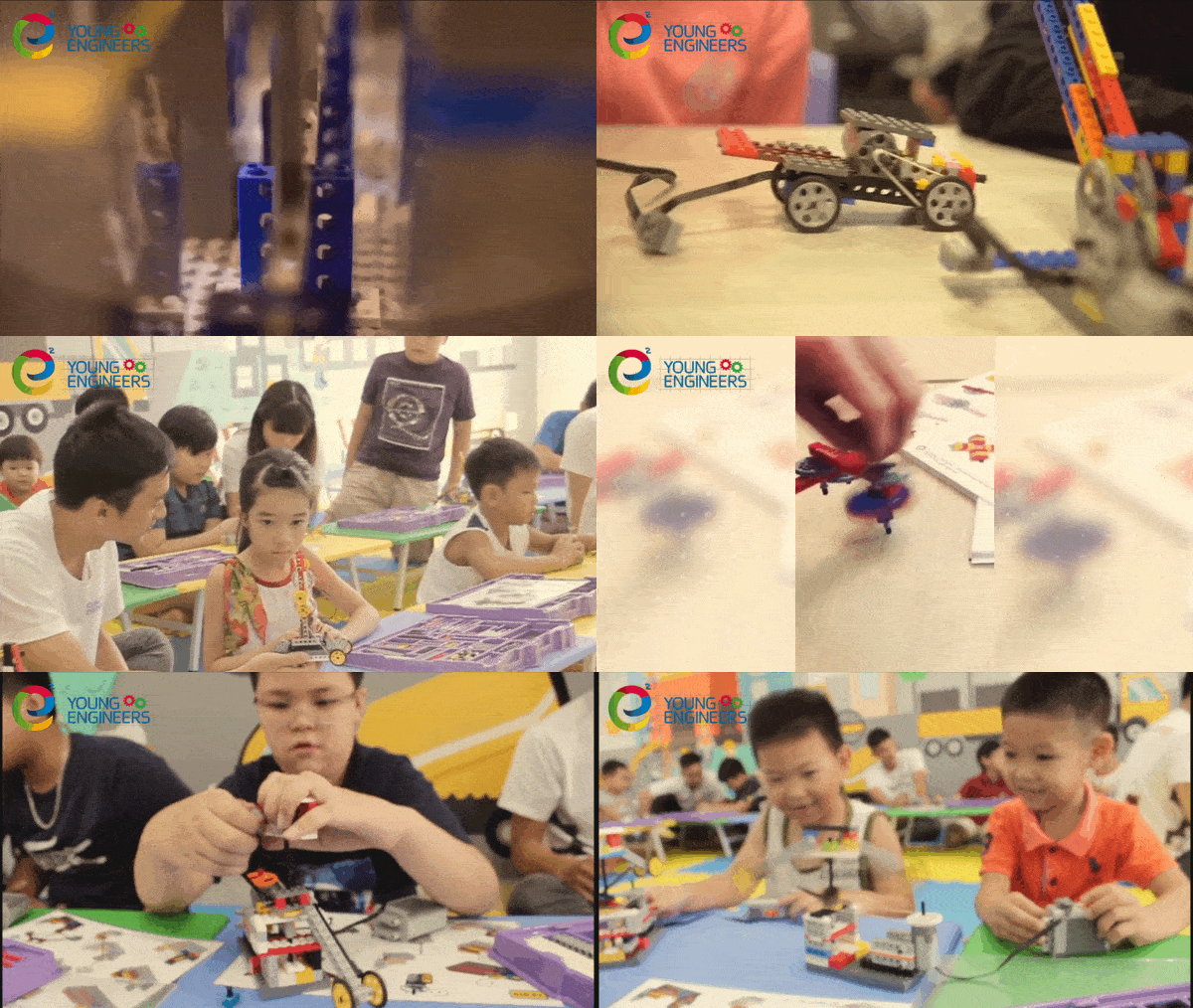
Description: Young Engineers is an award-winning global "edutainment" experience, recognized by the Harvard School of Education for its impact on children's focus, creativity, and problem-solving skills.


Conducted in English.
Introduction to robotic engineering.
Even kids with no English skills can easily succeed!
The Course

"Toy Making Challenge"
Toy Making Challenge lessons start with a brief demonstration that is immediately followed by building Young Engineers models. Participants use our building blocks set exclusively made by Young Engineers’ research and development team. Each lesson inspires students to create, build and learn through a fun and entertaining experience.

Curriculum
Participants learn about many different topics of classical mechanics, including the following: the laws of physics, centrifugal force, centripetal force, force of inertia, kinetic energy, potential energy, law of action-reaction, lift force, torque, leverage points, load distribution, force conservation, angular momentum and more. Participants learn the necessary mathematical skills required in making the scientific calculations needed to build their models.

"P" Based Learning
Problem Based Learning: After the construction of a model, our Young Engineers instructors will ask the student to enhance their model in order to solve a given problem demonstrated in that lesson.
Product Based Learning: Students build a product that demonstrates the scientific principles taught in that lesson.
Project Based Learning: Through planning and executing a project from start to finish, students develop their team-building and presentation skills. In addition, they will improve their organizational and time management abilities.
Spiral Learning
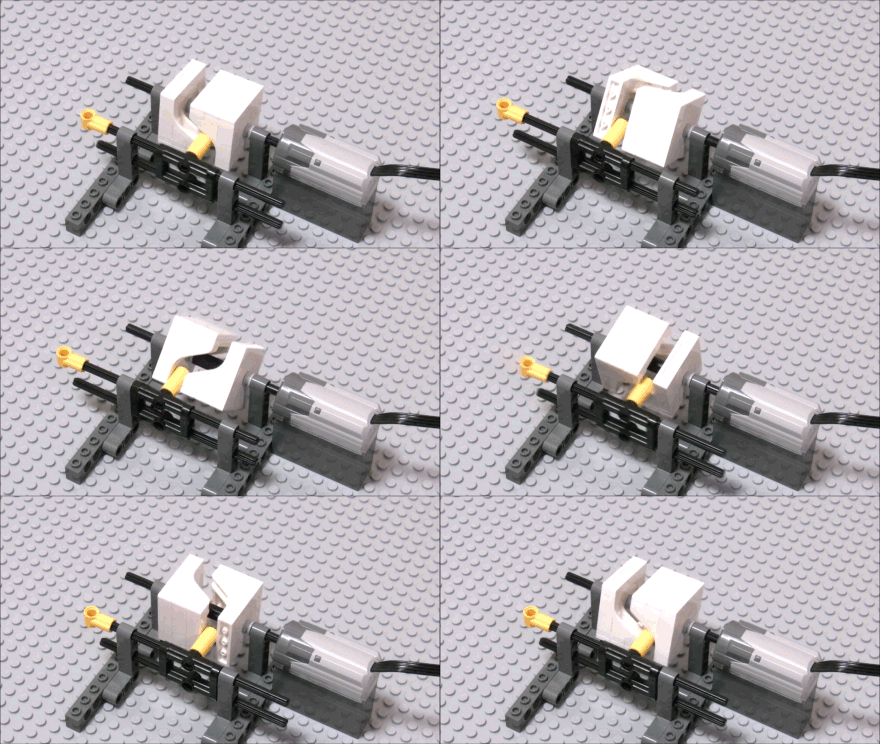
Our instructors teach the principles and terms of a given lesson on a basic level. The next step of the spiral is introducing these principles in new contexts, and then greater depth with each step.


Academic Success
After extensive testing by the Center for Cooperative Advancement, statistics show that students participating in Young Engineers enrichment programs achieve higher grades in all science subjects taught in school.

© Copyright 2025 e Square Young Engineers Franchising Ltd. All rights reserved. LEGO® is a registered trademark of companies which do not sponsor, authorize or endorse these programs or this website.


Target:
Ages 4 and up
Capacity:
6 students per lesson
Frequency:
Once per week, bi-weekly, twice per month
Lesson Time:
75 minutes
(Arranged on days & times convenient for your facility)
Course Length:
Ongoing monthly membership
Any student can join or cancel during any month
Lesson Fee:
5,999 yen per month, per child
(25% off for siblings)
Benefits:
10% of sales are paid to your facility each month.
Young Engineers program adds academic value to your facility.
General Operation Information
1. You provide us a space to conduct the lessons
2. We agree on specific dates/times for the lessons
3. We provide you promotional materials to give parents
4. Parents register & pay for the lessons on our website.
5. We pay you 10% of sales each month
View our video channel below for a deeper look inside!
About Young Engineers
About Young Engineers


About Young Engineers

Bricks Challenge 2.0
